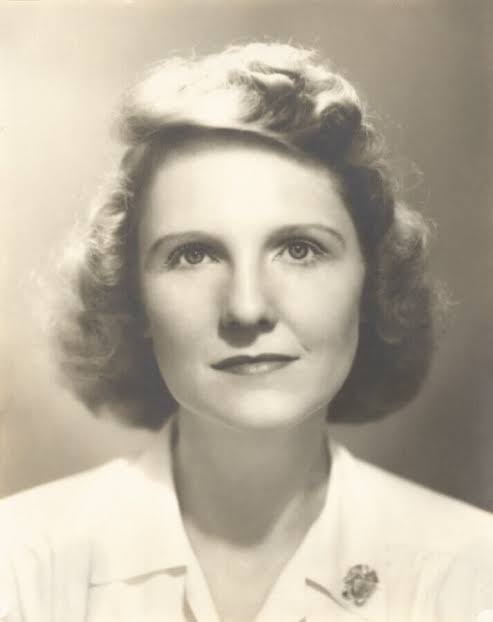
Margie Samuels, who lived from 1911 to 1985, understood something the bourbon industry of her era did not: that on a crowded shelf, the bottle is doing the arguing.
The whisky that became Maker’s Mark was a joint project. Her husband, Bill Samuels Sr., worked out the liquid — famously testing grain combinations by baking loaves of bread from candidate mash bills, on the reasoning that he could taste the effect of the grains far faster than he could distil and age them. That work produced a wheated bourbon, using wheat rather than rye as the flavouring grain. Their collaboration came together in 1953.
Everything a customer actually encounters was Margie's.
The name
She collected fine English pewter, and knew that pewterers stamped their best work with a personal maker's mark. That became the name of the whisky — an assertion, in two words, that the bottle was the work of an identifiable hand.
The bottle
She designed it square. On a 1950s liquor shelf, which was a wall of round brown bottles, a square silhouette read as different before a shopper was close enough to see a label at all.
The label
She hand-tore the edges rather than cutting them and set the text in a classic antique face, so the label looked handmade and old — deliberately at odds with the industrial, machine-cut packaging around it.
The wax
Her best-known invention was the dripping red seal. She worked it out in her own kitchen, melting sealing wax in a deep fryer and dipping the first bottles herself. No two dips run identically, so every bottle is visibly individual — a handmade signal that survives industrial-scale production, and one of the most recognisable trade dresses in world spirits.
Recognition, eventually
Margie Samuels was inducted into the Kentucky Bourbon Hall of Fame in 2014, nearly thirty years after her death. She was the first woman directly connected with a distillery to receive the honour, and the fifth woman inducted overall.
Her legacy is a proposition the category now takes for granted: the presentation is not packaging wrapped around the product, it is part of the product. Elmer T. Lee's decanter for Blanton's thirty years later worked on exactly the principle she had proved.