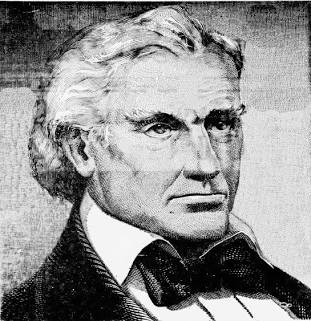
Before the 19th century, American distilling was a farm activity. Whiskey was what happened to surplus grain, and its quality depended on ambient temperature, whatever yeast was in the air, and luck. Dr James C. Crow changed that by treating a still like laboratory apparatus.
Crow was born in 1789 and trained in medicine at Edinburgh, graduating around 1814. He came to America and moved from Philadelphia to Kentucky around 1820, taking work at a distillery on Grier's Creek in Woodford County. He died on 20 April 1856.
What sour mash actually does
Crow did not invent the sour mash process, and careful histories credit him with perfecting and systematising it rather than originating it. The method takes a portion of the spent, acidic liquid left from a previous distillation — the backset, or stillage — and adds it to the next batch of cooked grain.
Two things follow. The acidity lowers the pH of the fresh mash, which suppresses the wild bacteria that would otherwise spoil a fermentation. And carrying material forward from batch to batch carries the working yeast culture with it, so each fermentation begins from a known population rather than whatever happens to land in the tub. The result is a flavour profile a distiller can reproduce.
The instruments
Crow's real innovation was measurement. Distillers of the period judged strength by shaking a jar and reading the bubbles that formed on the surface — the bead — a technique that is better than nothing and worse than a scale.
Crow worked with a hydrometer to read the density of the spirit, a saccharometer to measure the sugar available in the mash, thermometers to hold fermentation temperature where he wanted it, and litmus paper to test the acidity that the backset was there to create. That last one matters: it means the pH control was not a happy accident of tradition but something he was deliberately monitoring.
Old Crow
The whiskey he made carried his name and became one of the most respected American brands of the 19th century. Old Crow's reputation in that era is inseparable from the political and literary figures said to have favoured it — Henry Clay, Walt Whitman and Ulysses S. Grant are all named in the traditional accounts, though these attributions come to us through a century of brand storytelling and should be read as reputation rather than documented preference.
What is not in question is the method. Sour mashing on Crow's model became standard practice across Kentucky, and remains standard today: the phrase on a modern label is a direct inheritance from a physician with a hydrometer.