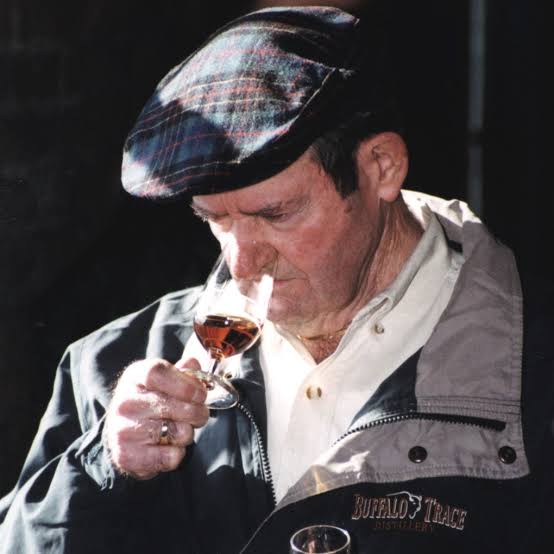
To see what Elmer T. Lee did, you have to see how bad things were. By the late 1970s American whiskey was in free fall. Drinkers had moved to vodka and gin; the premium brown-spirit market belonged to imported Scotch. Bourbon read as cheap, dated and unfashionable — an old man's drink. Distilleries were closing, and the ones still open were sitting on stocks nobody wanted.
Lee, born in 1919, was a World War II veteran who joined the George T. Stagg Distillery — now Buffalo Trace — as an engineer in 1949 and worked his way up to master distiller. He died in 2013.
The honey barrel
The idea came from his predecessor. Colonel Albert B. Blanton had a habit of picking a single exceptional barrel from the centre of Warehouse H and bottling it unblended for friends and visiting dignitaries. Warehouse H is metal-clad, so it swings harder and faster through Kentucky's temperature extremes than a brick warehouse does, and it ages spirit aggressively. The barrels in its centre sections were Blanton's honey barrels.
In 1984, tasked with producing something that could compete with high-end Scotch, Lee did commercially what Blanton had done privately.
Blanton's, 1984
Blanton's Single Barrel was the first commercially released single barrel bourbon. Each bottle came from one identified barrel, bottled at 93 proof (46.5% ABV), presented in a faceted decanter with a horse-and-jockey stopper. It launched at around $24 — a striking figure at a time when standard bourbon was a low-single-digit purchase.
Every part of that was a challenge to industry orthodoxy. Blending exists to erase barrel-to-barrel variation; the entire discipline of the master blender is to make this year taste like last year. Lee's proposition was the reverse: that variation is the interesting part, and that a drinker would pay more for a bottle nobody could exactly reproduce.
What it started
It worked, and the super-premium American category exists because it did. Single barrel and small batch bottlings followed across the industry, and bourbon began the long climb back to being something people collect rather than merely drink. Lee stayed on as an ambassador for the distillery for decades after retiring.
Buffalo Trace later named a bourbon after him. Elmer T. Lee Single Barrel is drawn from the same high-rye mash bill as Blanton's and bottled at 90 proof — a barrel selection he continued to make personally into his nineties.